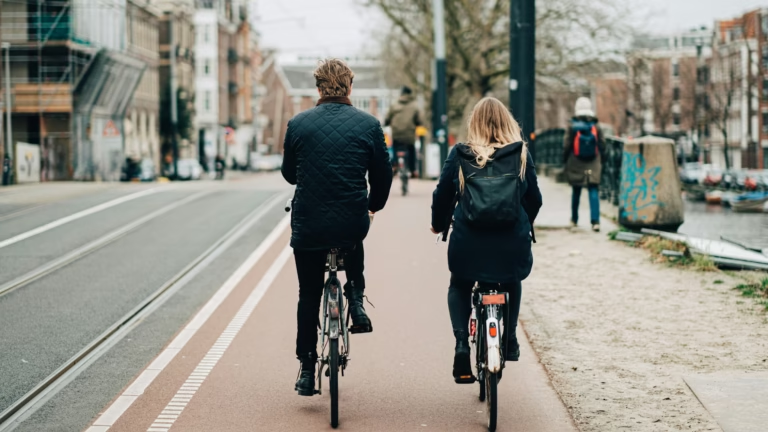
If you’ve spent any time in Denmark, you’ve probably noticed one thing: bikes are everywhere. With over 1.4 million bicycles registered in the country and approximately 62% of Copenhagen residents using bikes as their primary mode of transport, cycling isn’t just a hobby here: it’s a way of life.
But where there are bikes, there are also bike thieves. In 2022 alone, over 40,000 bikes were stolen in Denmark. In Copenhagen, nearly 3% of all bicycles are stolen annually, with around 17,000 bikes reported stolen each year in the capital. The good news? With the right precautions, you can dramatically reduce your chances of becoming a statistic. Learning how to keep your bike safe in Denmark is essential for every cyclist.
Here’s everything you need to know about how to keep your bike safe in Denmark.
- Register Your Bike
- Understand Your Legal Obligations
- Invest in the Right Lock
- Keep Proof of Ownership
- Choose Where You Park Wisely
- Understand Your Insurance Coverage
- What to Do If Your Bike Gets Stolen
Register Your Bike
Bike registration in Denmark can help increase your chances in recovering stolen bikes. In fact, registration is one of the most effective ways to keep your bike safe in Denmark.
– Why Registration Matters
According to recent data, registered bikes have a recovery rate of over 50%, compared to just 10% for unregistered bikes. That’s a massive difference.
The numbers tell a clear story: as more cyclists register their bikes, theft rates decline. Reported thefts in Denmark have gradually decreased from 22,000 in 2018 to 15,000 in 2023, while registered bikes increased from 150,000 to 200,000 over the same period.
– Where to Register
Local police stations: Most police stations in Denmark offer free bike registration. Bring your bike’s serial number and personal identification.
Online platforms: Websites like BikeTag allow you to register from home. You’ll need your bike’s details and a way to verify your identity.
Bike shops: Many bike shops offer registration services when you purchase a new bike. Ask your retailer if they provide this service.
What You’ll Need
- Personal information (name, address, contact details)
- Bike make, model, and color
- Serial number (usually stamped on the frame)
- Proof of purchase (receipt or invoice)
– The BikeKey Solution
A new Danish innovation called BikeKey is making bike registration even more effective. This platform connects your bike’s frame number to your MitID (Denmark’s digital ID system). If your bike is found, the police can instantly identify you and return it.
BikeKey users also receive a sticker—a digital license plate for their bike—that makes it easier for authorities to handle theft cases. The results speak for themselves: BikeKey reduces theft risk by 50%, and 17% of stolen bikes in the system are recovered. The platform is already active in Denmark with over 50,000 registered bikes and is expanding to Sweden, Norway, and Iceland. For anyone serious about how to keep your bike safe in Denmark, BikeKey is worth exploring.
Understand Your Legal Obligations
Before we dive into security tips, let’s start with what Danish law requires of you. Understanding the legal framework is part of learning how to keep your bike safe in Denmark.
According to the Danish Traffic Law (Færdselsloven), when you leave your vehicle (and yes, that includes your bike), you must secure it so it cannot be set in motion by itself. More importantly, you are legally required to take measures to ensure that the vehicle cannot be used by others without authorization. Any mandatory anti-theft device must be activated.
In plain language? You must lock your bike when you leave it. There’s no specific requirement that your bike must have a built-in lock, but if you leave it unlocked for an extended period, you’re not only risking theft—you’re technically breaking the law.
Invest in the Right Lock (and Use It Properly)
– What the Law Requires for Insurance Coverage
Here’s something many cyclists discover too late: if your bike is stolen and you didn’t use an approved lock, your insurance won’t cover it. To be eligible for compensation, you must use a lock that is approved by Dansk Varefakta Nævn (DVN).
– Types of Locks and Their Security Levels
- U-Lock – High security. Best for long-term parking in high-risk areas.
- Chain Lock – Medium to high security. Ideal for securing your bike to fixed objects.
- Folding Lock – Medium security. Great for travel and daily commuting.
- Cable Lock – Low security. Suitable only for quick stops, not for extended parking.
– Locking Techniques That Actually Work
Lock through the frame. Always lock your bike through the frame, not just the wheel. A thief can remove a wheel and leave the rest behind.
Lock to something solid. Attach your bike to a fixed object like a bike rack, lamp post, or designated stand. Make sure whatever you’re locking to is actually secure—some thieves have been known to cut through wooden posts.
Position the lock high. If you’re using a cable or chain lock, place the lock mechanism high off the ground. This prevents thieves from placing the lock on the ground and using their body weight to break it.
Use two different types of locks. Combining a U-lock with a chain or cable lock forces thieves to use two different tools and techniques, doubling their time and effort. Professional thieves often target easy opportunities—if your bike looks difficult to steal, they’ll move on. These techniques are essential knowledge if you want to keep your bike safe in Denmark.
Understanding what your home contents insurance covers is just one part of managing your finances in Denmark. For a complete breakdown of salaries, tax deductions, and what you can expect to take home, check out our guide Understanding Your Denmark Salary: A Complete Guide to Pay & Taxes.
Keep Proof of Ownership
When you buy a new bike with a new lock, you receive a låsebevis (lock certificate) from Dansk Varefakta Nævn. This certificate must be filled out with your bike’s frame number.
Keep this certificate. If your bike is stolen and you need to file an insurance claim, your insurance company will require the låsebevis as proof that you used an approved lock. This simple document is a crucial part of how to keep your bike safe in Denmark.
– If You Buy a Used Bike
Always ask the seller for a receipt. This documents that you’re the rightful owner and also protects you from accidentally buying a stolen bike.
Before you buy, check the frame number. In Denmark, every bicycle has a unique frame number (stelnummer) engraved into the frame. You can check if a bike has been reported stolen by:
- Calling 114 (police non-emergency) and asking about the frame number
- Emailing your local police district with the number
- Using the Politi website to search for stolen bikes
- Using apps like BikeKey or BikeTag to verify ownership
Taking this simple step protects you from buying stolen property and ensures you’re the legal owner.
Choose Where You Park Wisely
Location matters more than you might think when it comes to how to keep your bike safe in Denmark.
Avoid isolated areas: Don’t park your bike on stretches where many people pass at night. Try to avoid parking at major train stations like København H (Copenhagen Central Station) or Aarhus H (Aarhus Central Station). These hubs are prime hunting grounds for thieves due to the sheer volume of bikes and foot traffic.
Use well-lit, busy areas: Thieves prefer to work unnoticed. High-visibility areas with plenty of foot traffic are your friends.
Consider secure parking: If you’re commuting by train or bus, check whether the station offers aflåst cykelparkering (locked bike parking). Some stations have secure, access-controlled areas that are much safer than open racks.
Store bikes indoors when possible: If you have access to a locked room, shed, or garage, use it. The safest bike is the one thieves can’t see.
The commuter’s trick: Many Danes who commute by public transport use an older, less valuable bike for the first and last leg of their journey. The reasoning? If it gets stolen, the loss is smaller.
Understand Your Insurance Coverage
Most bikes in Denmark are covered through indboforsikring (home contents insurance), not a separate bike policy. Knowing what your policy covers is another piece of the puzzle when learning how to keep your bike safe in Denmark.
– What Standard Coverage Includes
Standard home contents insurance typically covers bikes up to a certain amount—for example, Topdanmark automatically covers bikes up to 19,649 DKK for fire, theft, or damage during theft attempts.
– What to Check
Coverage limits: If your bike is worth more than the standard amount, you may need to increase your coverage. Some insurers allow coverage up to 117,891 DKK for expensive bikes.
Lock requirements: As mentioned earlier, your insurance won’t pay out if your bike wasn’t locked with an approved lock. This is non-negotiable.
Deductibles: Know your selvrisiko (deductible)—the amount you’ll pay before insurance kicks in.
Extended coverage: Some insurers offer cykelkasko (bike comprehensive coverage) that protects against more types of damage, including crashes.
What to Do If Your Bike Gets Stolen
Despite your best efforts, theft can still happen. Here’s what to do:
Report it immediately by contacting the police and providing your bike’s make, model, color, and serial number. The sooner you report, the better the chances of recovery.
Check online marketplaces. Some cyclists have found their bikes listed for sale on platforms like DBA or Facebook Marketplace. If you spot yours, contact the police—don’t confront the seller yourself.
Plus, notify your insurance company and file a claim as soon as possible. You’ll need your låsebevis and police report.
If you’re registered in the BikeKey system, they may be able to assist with recovery efforts.
Conclusion
Keeping your bike safe in Denmark comes down to three simple principles: use quality locks properly, register your bike, and be smart about where you park. By following the advice in this guide, you’ll know exactly how to keep your bike safe in Denmark and enjoy worry-free cycling.
The good news? Denmark offers excellent infrastructure for cyclists, and with the right precautions, the vast majority of bike rides end with your bike exactly where you left it. By investing a little time in security now, you can avoid the frustration, expense, and hassle of dealing with theft later.
So, lock up, register, and enjoy the ride. Denmark’s cycling culture is waiting for you.
Join our community for daily tips and updates on Instagram, LinkedIn, Facebook, and TikTok.